Just a note that I'm guest blogging over at Novel Spaces today. I'm talking about GEMS, and it has something to do with writing.
Like you couldn't guess that!
Friday, September 18, 2009


Thursday, September 17, 2009
Lovely Blog
James Reasoner has given "Razored Zen" the "One Lovely Blog" award! Thanks, James!
The rules:
1) Accept the award, and don’t forget to post a link back to the awarding person.
2) Pass the award on.
3) Notify the award winners.
Although I don't visit blogs that aren't lovely in some way or another, and so there are many that deserve this award, I must pass the award along to a few folks who live close to me. First, Lana, who lives very close to me and who makes it all worthwhile. And Candy, who I've been in a writing group with for quite a few years now. And Sphinx Ink, who is mysterious to some but whom I know quite well.
-----
-----
The rules:
1) Accept the award, and don’t forget to post a link back to the awarding person.
2) Pass the award on.
3) Notify the award winners.
Although I don't visit blogs that aren't lovely in some way or another, and so there are many that deserve this award, I must pass the award along to a few folks who live close to me. First, Lana, who lives very close to me and who makes it all worthwhile. And Candy, who I've been in a writing group with for quite a few years now. And Sphinx Ink, who is mysterious to some but whom I know quite well.
-----
-----
Sunday, September 13, 2009
Upcoming Week: Upcoming Month
I’ve got quite a week coming up, followed by quite a month after that. I hope I can get everything done. First, I’ll be guest blogging over at Novel Spaces this Friday, the 18th. I’ll be talking about a concept called GEMS, and I hope you’ll stop by.
Next, my first signing for Write With Fire is this Saturday, September 19, at the Causeway branch of the St. Tammany Library system. Everything starts at 10:00 in the morning, and I’ll probably talk on writing for half an hour to forty-five minutes, followed by a question and answer period and then a signing. Although the signing is primarily for Write With Fire, I’ll have copies of the Talera books and Cold in the Light available as well. I know that most of you aren’t in position to come, but come if you can and if not send me good wishes.
The address and phone number for that specific library branch is:
Causeway Branch Library
Address: 3457 Highway 190
Mandeville, LA 70471
Telephone: (985) 626-9779
Fax: (985) 626-9783
E-Mail: causeway@mail.sttammany.lib.la.us
As for actual writing, the novel, Razored Land, is at a complete standstill at 144 pages. That’s where the “month” comes in. I’ve got a 7,500 word story due at the end of September, a book review that I agreed to do at the same time, and a 1000 word story due by the first of October. Immediately after that last story I’ve got roughly three weeks to do a scientific article on Charles Darwin, all the while preparing for the Louisiana Book Festival on October 17
This, of course, is secondary to that pesky…“Day Job.” After all that is done I’m going to take a week off writing.
I want to also thank Erik Donald France for his great review of my book at Write With Fire, and for his follow-up commentary. Check it out. And thanks so much Erik for your support.
And to all my friends in Detroit, no offense, but Go Saints!.
----
----
Next, my first signing for Write With Fire is this Saturday, September 19, at the Causeway branch of the St. Tammany Library system. Everything starts at 10:00 in the morning, and I’ll probably talk on writing for half an hour to forty-five minutes, followed by a question and answer period and then a signing. Although the signing is primarily for Write With Fire, I’ll have copies of the Talera books and Cold in the Light available as well. I know that most of you aren’t in position to come, but come if you can and if not send me good wishes.
The address and phone number for that specific library branch is:
Causeway Branch Library
Address: 3457 Highway 190
Mandeville, LA 70471
Telephone: (985) 626-9779
Fax: (985) 626-9783
E-Mail: causeway@mail.sttammany.lib.la.us
As for actual writing, the novel, Razored Land, is at a complete standstill at 144 pages. That’s where the “month” comes in. I’ve got a 7,500 word story due at the end of September, a book review that I agreed to do at the same time, and a 1000 word story due by the first of October. Immediately after that last story I’ve got roughly three weeks to do a scientific article on Charles Darwin, all the while preparing for the Louisiana Book Festival on October 17
This, of course, is secondary to that pesky…“Day Job.” After all that is done I’m going to take a week off writing.
I want to also thank Erik Donald France for his great review of my book at Write With Fire, and for his follow-up commentary. Check it out. And thanks so much Erik for your support.
And to all my friends in Detroit, no offense, but Go Saints!.
----
----
Friday, September 11, 2009
Learning on the Job
First, let me offer honors to those who died and suffered on September 11. You know which one. I arrived at work that day with no knowledge of what was happening, but my secretary had a TV and was watching the news. I’ll say no more than that it was heart wrenching, and if you want there are many, many fine blogs focusing on that event today. I’m going to talk about something different here.
Most, if not all, jobs require some learning on the job, but some types of work require more than others. Teaching is a prime example. I lament at times that the field of psychology continues to change at an incredible rate. It would be nice once in a while to teach the same facts in the same class for two years running. Of course, not every fact changes from year to year, but enough new and revised information is introduced every year to keep me hopping. Even though I’m simply unable to keep up with all the new information, I like the fact that my field is not static. It’s dynamic and exciting to discover new things, and to anticipate the discovery of more.
Unfortunately (sometimes), my second job is worse than my first. Writing fiction as a field dwarfs the learning requirement for psychology, and I’ll bet for most academic disciplines. Yesterday, because of writing projects I’m currently engaged in, I had to learn about wombats, badgers, and digging animals of all kinds, about river cane, bamboo, and sugar cane, about moonlight and werewolf mythology, and about child development, childhood aggression, child soldiers, and symbolic intelligence. My brain was pretty tired by the time all that was done.
To write convincingly, even if you’re writing fantasy, there is a tremendous amount of information and detail that you need to know. But correct details are not always enough. I’ve found readers to fall into three general categories where story details are concerned. First, we have the largest group, who merely want the facts of the story to sound plausible! These folks read for the story and as long as you don’t have any glaring errors you can get away with little twists on detail.
For example, take my question the other day about the age at which a boy might successfully sneak a dagger out of an unsuspecting enemy’s sheath and stab that enemy. I got a variety of answers, ranging from 5 all the way up to about 12. This told me a couple of things. First, the actual age at which a boy might carry out such an act is undetermined. Second, whatever age I choose, I have to make it sound plausible that “my” youthful character could do it. If I achieve plausibility, then probably 90 percent of the readers aren’t going to care about whether I’m absolutely correct or not.
The other two groups of readers are much smaller. One group actually ‘knows’ the absolute details. They are experts or well educated in that particular field. For example, if I get a gun caliber wrong in a story, most readers won’t care, but this second group will care a great deal and will be irritated with me for the mistake. This group can only be responded to by making your story facts as true to real life as can be. And I think that is a good thing. Although most novelists will occasionally take “liberties” with true events or facts in order to craft a compelling story, we certainly need to know the facts before we manipulate them.
The third group of readers, also small, is the hardest to please. These folks believe themselves to be experts but, in fact don’t know the true details. However, and I think many historical novelists will agree, this group can be very vocal in pointing out what they see as wrong. (Even if it’s correct.) I’ve been lucky that I’ve only had this happen to me a couple of times. It can be frustrating, however. I work hard to get the reality straight in my stories, but I have made mistakes and, although I feel chagrined, I don’t get upset when someone corrects my mistake. It’s the non-mistakes that are called mistakes that get to me.
So what kind of reader are you? Do small inaccuracies bother you? Is story more important to you than 100 percent factual accuracy? Do errors in some fields bother you more than in other fields? Just curious.
-----
-----
Most, if not all, jobs require some learning on the job, but some types of work require more than others. Teaching is a prime example. I lament at times that the field of psychology continues to change at an incredible rate. It would be nice once in a while to teach the same facts in the same class for two years running. Of course, not every fact changes from year to year, but enough new and revised information is introduced every year to keep me hopping. Even though I’m simply unable to keep up with all the new information, I like the fact that my field is not static. It’s dynamic and exciting to discover new things, and to anticipate the discovery of more.
Unfortunately (sometimes), my second job is worse than my first. Writing fiction as a field dwarfs the learning requirement for psychology, and I’ll bet for most academic disciplines. Yesterday, because of writing projects I’m currently engaged in, I had to learn about wombats, badgers, and digging animals of all kinds, about river cane, bamboo, and sugar cane, about moonlight and werewolf mythology, and about child development, childhood aggression, child soldiers, and symbolic intelligence. My brain was pretty tired by the time all that was done.
To write convincingly, even if you’re writing fantasy, there is a tremendous amount of information and detail that you need to know. But correct details are not always enough. I’ve found readers to fall into three general categories where story details are concerned. First, we have the largest group, who merely want the facts of the story to sound plausible! These folks read for the story and as long as you don’t have any glaring errors you can get away with little twists on detail.
For example, take my question the other day about the age at which a boy might successfully sneak a dagger out of an unsuspecting enemy’s sheath and stab that enemy. I got a variety of answers, ranging from 5 all the way up to about 12. This told me a couple of things. First, the actual age at which a boy might carry out such an act is undetermined. Second, whatever age I choose, I have to make it sound plausible that “my” youthful character could do it. If I achieve plausibility, then probably 90 percent of the readers aren’t going to care about whether I’m absolutely correct or not.
The other two groups of readers are much smaller. One group actually ‘knows’ the absolute details. They are experts or well educated in that particular field. For example, if I get a gun caliber wrong in a story, most readers won’t care, but this second group will care a great deal and will be irritated with me for the mistake. This group can only be responded to by making your story facts as true to real life as can be. And I think that is a good thing. Although most novelists will occasionally take “liberties” with true events or facts in order to craft a compelling story, we certainly need to know the facts before we manipulate them.
The third group of readers, also small, is the hardest to please. These folks believe themselves to be experts but, in fact don’t know the true details. However, and I think many historical novelists will agree, this group can be very vocal in pointing out what they see as wrong. (Even if it’s correct.) I’ve been lucky that I’ve only had this happen to me a couple of times. It can be frustrating, however. I work hard to get the reality straight in my stories, but I have made mistakes and, although I feel chagrined, I don’t get upset when someone corrects my mistake. It’s the non-mistakes that are called mistakes that get to me.
So what kind of reader are you? Do small inaccuracies bother you? Is story more important to you than 100 percent factual accuracy? Do errors in some fields bother you more than in other fields? Just curious.
-----
-----
Wednesday, September 09, 2009
A Question
OK, here’s a question for my blog colleagues.
I’m working on a fantasy story in which a young human boy sees his father killed by raiders. The raiders are armed with crossbows. The boy runs at the raider who shot his father and tries to hit him, but the raider only laughs and kicks his feet from under him. The raider turns to his friends laughing, but the boy, lying on his back, notices a sheathed dagger at the raider’s hip, leaps up, grabs the dagger, and stabs the raider in the groin. He doesn’t kill him but wounds him pretty badly.
Now, here’s the question. What do you think would be the youngest age at which a boy might be able to carry out such an act? That means, he’d be old enough to realize what to do, how to do it, and physically carry out the act. I need the boy to grow up with the raiders and have very little memory of his own people.
----
----
I’m working on a fantasy story in which a young human boy sees his father killed by raiders. The raiders are armed with crossbows. The boy runs at the raider who shot his father and tries to hit him, but the raider only laughs and kicks his feet from under him. The raider turns to his friends laughing, but the boy, lying on his back, notices a sheathed dagger at the raider’s hip, leaps up, grabs the dagger, and stabs the raider in the groin. He doesn’t kill him but wounds him pretty badly.
Now, here’s the question. What do you think would be the youngest age at which a boy might be able to carry out such an act? That means, he’d be old enough to realize what to do, how to do it, and physically carry out the act. I need the boy to grow up with the raiders and have very little memory of his own people.
----
----
Monday, September 07, 2009
Magical Thinking
Magical thinking is when a person believes in a process that breaks the currently understood rules of our physical and psychological sciences. For example, believing that “Rain, rain, go away. Come again some other day” works. Magical thinking is a common characteristic of what Jean Piaget called the “Preoperational Stage” of mental development, which occurs between the ages of 2 and 7.
Piaget believed that children grew out of magical thinking but we know today that most adults still show elements of it. Anyone who carries a good luck charm is exhibiting magical thinking. Superstitions, like the #13, the black cat, breaking a mirror, etc., are illustrations of magical thinking.
There are, of course, levels of magical thinking. Believing in ghosts is magical thinking but I don’t put it into the same category as “Rain, rain, go away.” The reason is that it is clear that humans don’t yet know all the rules that govern the natural world. Science could discover mechanisms that govern ghost phenomena, while I see no chance of that happening for phrases like “Rain, rain…”
Even though some apparently “magical” phenomena may turn out to have a basis in reality, there is little doubt that society is better served by limiting magical thinking. It certainly should not be a part of the policy making process. And allowing magical thinking to creep into science would destroy the scientific process.
The problem for eliminating magical thinking is that humans are not really rational creatures. Almost everyone believes themselves to be rational. They are mistaken. No human is fully rational in all aspects of his or her life. The very structure of the brain works against it. I do believe, however, that most people can become aware of where they are being irrational, and adjust their behavior accordingly. We can, and should, take steps to minimize our irrationality in places where we need to apply reason.
For example, there is no rational reason why the Arkansas Razorbacks should be my favorite college football team. It’s irrational but causes no harm to anyone, as long as I don’t take it seriously enough to fight over. Some people, however, take loyalty to a sports team so seriously that they come to truly hate their opponents.
Politics is a particularly dangerous place to have magical thinking, and yet our political landscape is rife with it these days. It may be naïve, but it seems as if ‘some’ of the current plague of magical thinking could be minimized if people just took a deep breath and asked themselves: “Does that seem reasonable?”
Here are two examples.
The United States Government orchestrated the September 11th attack.
President Obama is not really an American citizen.
Do those statements really seem reasonable?
Certainly, even very bizarre things could be true. Processes that we think of as magical today might be explained scientifically tomorrow. But should we really waste a lot of mental effort on such things? Should we decide policy based upon the most irrational scenarios? Should we not at least recognize that we are being irrational, and proceed from that knowledge?
So, what’s your favorite “Does that seem reasonable” moment?
-----
-----
Piaget believed that children grew out of magical thinking but we know today that most adults still show elements of it. Anyone who carries a good luck charm is exhibiting magical thinking. Superstitions, like the #13, the black cat, breaking a mirror, etc., are illustrations of magical thinking.
There are, of course, levels of magical thinking. Believing in ghosts is magical thinking but I don’t put it into the same category as “Rain, rain, go away.” The reason is that it is clear that humans don’t yet know all the rules that govern the natural world. Science could discover mechanisms that govern ghost phenomena, while I see no chance of that happening for phrases like “Rain, rain…”
Even though some apparently “magical” phenomena may turn out to have a basis in reality, there is little doubt that society is better served by limiting magical thinking. It certainly should not be a part of the policy making process. And allowing magical thinking to creep into science would destroy the scientific process.
The problem for eliminating magical thinking is that humans are not really rational creatures. Almost everyone believes themselves to be rational. They are mistaken. No human is fully rational in all aspects of his or her life. The very structure of the brain works against it. I do believe, however, that most people can become aware of where they are being irrational, and adjust their behavior accordingly. We can, and should, take steps to minimize our irrationality in places where we need to apply reason.
For example, there is no rational reason why the Arkansas Razorbacks should be my favorite college football team. It’s irrational but causes no harm to anyone, as long as I don’t take it seriously enough to fight over. Some people, however, take loyalty to a sports team so seriously that they come to truly hate their opponents.
Politics is a particularly dangerous place to have magical thinking, and yet our political landscape is rife with it these days. It may be naïve, but it seems as if ‘some’ of the current plague of magical thinking could be minimized if people just took a deep breath and asked themselves: “Does that seem reasonable?”
Here are two examples.
The United States Government orchestrated the September 11th attack.
President Obama is not really an American citizen.
Do those statements really seem reasonable?
Certainly, even very bizarre things could be true. Processes that we think of as magical today might be explained scientifically tomorrow. But should we really waste a lot of mental effort on such things? Should we decide policy based upon the most irrational scenarios? Should we not at least recognize that we are being irrational, and proceed from that knowledge?
So, what’s your favorite “Does that seem reasonable” moment?
-----
-----
Thursday, September 03, 2009
Obama's Latest Evil
I interrupt my planned posting schedule to discuss something I read on the internet today that just really chaps my ass. Those of you who have been visiting my blog for a while know that I very seldom get into politics, but this time I can't help it.
Our new president wants to give a nationally televised speech directly addressing our school children. In it, he apparently wants to tell kids that education is important and that they should stay in school. Furthermore, he wants to address the issue of improving education and why education is important to our country.
Do you see the evil in that approach?
OK, I must confess, I don't see it either. In fact, it sounds like a fine idea to me. But apparently I'm missing something because certain Republicans, like Jim Greer and Katie Gordon of the Florida Republican Party, have attacked the plan as the equivalent of brainwashing.
I feel comfortable in saying that Greer and Gordon should be recalled before they do more harm. Let's face it, their argument is just ignorant. I don't care whether you like Obama or not, the man is not some kind of sorcerer who can spend 20 minutes talking to kids and turn them into Obama zombies. Anyone who thinks this is just, flat out, unequivocally, wrong. And plain silly to boot.
Actually, of course, I believe Greer and Gordon know full well how silly their argument is, but they think their constituents are too stupid to realize it. If I were a Republican I'd find this to be a horrible insult to my intelligence. To imagine that a sane person would believe it just boggles my mind.
Any time now I'm expecting intelligent people to stand up and say "enough."
Don't get me wrong, I absolutely don't think people have to agree with President Obama on everything, or on anything. There are legitimate debates to be raised about issues such as education and health care. But let's at least try to keep our debates in the realm of reality and not fantasy.
----
----
Our new president wants to give a nationally televised speech directly addressing our school children. In it, he apparently wants to tell kids that education is important and that they should stay in school. Furthermore, he wants to address the issue of improving education and why education is important to our country.
Do you see the evil in that approach?
OK, I must confess, I don't see it either. In fact, it sounds like a fine idea to me. But apparently I'm missing something because certain Republicans, like Jim Greer and Katie Gordon of the Florida Republican Party, have attacked the plan as the equivalent of brainwashing.
I feel comfortable in saying that Greer and Gordon should be recalled before they do more harm. Let's face it, their argument is just ignorant. I don't care whether you like Obama or not, the man is not some kind of sorcerer who can spend 20 minutes talking to kids and turn them into Obama zombies. Anyone who thinks this is just, flat out, unequivocally, wrong. And plain silly to boot.
Actually, of course, I believe Greer and Gordon know full well how silly their argument is, but they think their constituents are too stupid to realize it. If I were a Republican I'd find this to be a horrible insult to my intelligence. To imagine that a sane person would believe it just boggles my mind.
Any time now I'm expecting intelligent people to stand up and say "enough."
Don't get me wrong, I absolutely don't think people have to agree with President Obama on everything, or on anything. There are legitimate debates to be raised about issues such as education and health care. But let's at least try to keep our debates in the realm of reality and not fantasy.
----
----
Tuesday, September 01, 2009
A Time to Hang Up Your Guns: Part 1
Ernest Hemingway killed himself when he thought he’d lost it. Robert E. Howard spoke of the same thing in letters before he put a bullet in his brain. Jack London drank himself into oblivion at least in part for the same reason. There are many other examples but these are ones I know something about.
All three of these men were writers, and all three believed their best years and best work lay behind them. Two of them killed themselves when that happened. The third might as well have. Whatever “it” was, their gift, their muse, their will, they all felt they’d lost it.
I do believe that artists, writers, painters, musicians, etc, can indeed ‘lose’ it. Whatever powered the majesty of their imaginations and creativity can disappear. I certainly don’t suggest that such folks should kill themselves, but I wonder if they should…quit. Should they stop writing, stop painting, hang it up? I wonder, will it happen to me? Will I lose it? Will I know it when it happens? Or has it already happened?
What causes creative people to lose it? I suspect there are many possible reasons. Age is one, and along with age, health issues. I find, myself, that I typically don’t seem able to concentrate for as sustained a period of time now as I did when I was younger. And physically, sitting four hours at a keyboard takes a bigger toll on me now than it used to. Ray Bradbury’s style has changed dramatically since he was younger. Does age have anything to do with it?
“Will” is another factor. Before you’re published, the drive to reach publication is intense. But once you’ve seen your name in print a few times, other motivations have to come to the fore. Those may be to produce bigger, more complex works, to increase your audience, or your markets. But what about Stephen King and Dean Koontz? What makes them keep writing? Both probably have enough money coming in without it, and both have seen their names in print, and on films, numerous times. Some will say that both King and Koontz have lost “it,” at least some quality that their work once possessed but which no longer does. But have they lost it, or merely changed their priorities? I’d love to hear them tell me, honestly, what they think about their own skills as creative writers, both now, and in the past.
I’m going to post a second part to this discussion in a couple of days, but for now I’d love to get your feedback on the topic. What is the “it” that some folks seem to lose? What causes them to lose it? And is it ever possible to get it back?
---------
--------
All three of these men were writers, and all three believed their best years and best work lay behind them. Two of them killed themselves when that happened. The third might as well have. Whatever “it” was, their gift, their muse, their will, they all felt they’d lost it.
I do believe that artists, writers, painters, musicians, etc, can indeed ‘lose’ it. Whatever powered the majesty of their imaginations and creativity can disappear. I certainly don’t suggest that such folks should kill themselves, but I wonder if they should…quit. Should they stop writing, stop painting, hang it up? I wonder, will it happen to me? Will I lose it? Will I know it when it happens? Or has it already happened?
What causes creative people to lose it? I suspect there are many possible reasons. Age is one, and along with age, health issues. I find, myself, that I typically don’t seem able to concentrate for as sustained a period of time now as I did when I was younger. And physically, sitting four hours at a keyboard takes a bigger toll on me now than it used to. Ray Bradbury’s style has changed dramatically since he was younger. Does age have anything to do with it?
“Will” is another factor. Before you’re published, the drive to reach publication is intense. But once you’ve seen your name in print a few times, other motivations have to come to the fore. Those may be to produce bigger, more complex works, to increase your audience, or your markets. But what about Stephen King and Dean Koontz? What makes them keep writing? Both probably have enough money coming in without it, and both have seen their names in print, and on films, numerous times. Some will say that both King and Koontz have lost “it,” at least some quality that their work once possessed but which no longer does. But have they lost it, or merely changed their priorities? I’d love to hear them tell me, honestly, what they think about their own skills as creative writers, both now, and in the past.
I’m going to post a second part to this discussion in a couple of days, but for now I’d love to get your feedback on the topic. What is the “it” that some folks seem to lose? What causes them to lose it? And is it ever possible to get it back?
---------
--------
Saturday, August 29, 2009
Raising a Stink

Most of the poets I know are academics, and sometimes I forget that poetry can come from anyone, anywhere, at anytime. Mark Durfee, AKA The Walking Man, is not an academic, and his poetry is rooted in concrete, abandoned houses, vacant lots, and people who live close to the bone.
Mark is a born and raised Detroiter who left for a stint in the military and then spent four years tramping the roads of North America before returning home to work and raise a family. Now retired, he writes, and his discipline and productivity is amazing.
Stink: Poetry and Prose of Detroit is Mark’s second poetry collection. I can’t imagine it will be his last. This collection is full of power, passion, rage, and, yes, love. The phrase “pulls no punches” is overworked but it certainly applies to these poems and short prose pieces. The piece entitled “Got Obscenity?” is a perfect example. Which is worse, the piece asks, a few curse words or the suffering of the children and the poor? I know which side I come down on.
Detroit is not unique among American cites in its suffering, but it is iconic, and Mark shows us all the agonies of the city in solid, filling language. His words also show, though, that there is and can be hope, and that it comes not from the government or the city elite, but from the people in the neighborhoods when they start to care.
At present, you can only get a copy of Stink through Mark’s blog site. Check it out here. I recommend it.
----
----
Wednesday, August 26, 2009
Orbs
My classes are fairly small this year, which is nice for a change, allowing me to do more in-class discussion. The reason behind the small classes is that in the school year after Hurricane Katrina we had one of our smallest enrollments in 30 years, and that is the class getting ready to graduate now. Since I teach mostly upper-level classes, that's why I'm seeing the small sizes this year.
I don't have much else to post about since I've barely had time to think this past week, but I thought I'd leave you with a couple of intersting photos that Lana took when we were at our local Flatwoods nature preserve this weekend. Did we brush against something mysterious? You be the judge! (You will probably have to click on the pictures to enlarge them to see what I'm talking about.)
In the first picture, on the left, what looks like a full moon toward the top of the photo...isn't. If you look down to the area between the trees you'll clearly see the crescent moon. So what is the other thing? A "fool" moon perhaps?
In the second photo there's something similar. The crescent moon is brightly visible, but look to the left and just a bit lower, to where a faint orb is caught within the branches of the pine. It looks very much like a full moon, even showing, to my eyes, a hint of the Man in the Moon's face.
Are you hearing Twilight Zone music? Or are you a buzz kill who will say: "Oh it's just a camera glitch!"
Personally, I'd really like it to be something weird!


---
---
I don't have much else to post about since I've barely had time to think this past week, but I thought I'd leave you with a couple of intersting photos that Lana took when we were at our local Flatwoods nature preserve this weekend. Did we brush against something mysterious? You be the judge! (You will probably have to click on the pictures to enlarge them to see what I'm talking about.)
In the first picture, on the left, what looks like a full moon toward the top of the photo...isn't. If you look down to the area between the trees you'll clearly see the crescent moon. So what is the other thing? A "fool" moon perhaps?
In the second photo there's something similar. The crescent moon is brightly visible, but look to the left and just a bit lower, to where a faint orb is caught within the branches of the pine. It looks very much like a full moon, even showing, to my eyes, a hint of the Man in the Moon's face.
Are you hearing Twilight Zone music? Or are you a buzz kill who will say: "Oh it's just a camera glitch!"
Personally, I'd really like it to be something weird!


---
---
Sunday, August 23, 2009
The Elements of Horror: The Gross Out.
There’s a famous quote from Stephen King which says something like: “I consider terror to be the finest emotion, and so I will try to terrify the reader. But if I cannot terrify, I’ll horrify. And if I cannot horrify, I’ll go for the gross out.”
Mainly today, I want to talk about the gross out and its role in horror fiction. The gross out occurs when the reader makes the “disgust” face. The reader’s head recoils slightly from the page. The mouth curves back and down and the lips purse slightly as if the person has tasted something foul. The nostrils are flared, not to draw in a scent but rather to push air out so no scent can get in. Imagine what your face does when you smell something that really stinks and you’ll have the disgust face.
Disgust is an emotion, and as such it is capable of being evoked by physical description. Disgust is generally one element of horror, but it is, to my way of thinking, the least important element. Disgust is also easy to evoke, although easier in some readers than in others. I’ve read a lot of horror fiction in my day, for example, and written quite a bit, and it’s pretty hard to gross me out. A scene written purely for the gross out is thus likely to work best on those who read little if any horror. A good horror writer can typically gross out most folks with a snap of the fingers. But all you do then is send those folks away from your work, not draw them in. For the gross out to work it has to be only one element, a minor element, among all the other elements of good storytelling.
To avoid grossing out my blog readers, I’m going to give only vague examples of what I’m talking about below. I recently read Spawn by Shaun Hutson because someone said he was one of the grossest writers out there. The book certainly had a lot of grossness in it. For example, one early scene has hospital workers burning bed linens stained with all manner of bodily fluids. I made the disgust face at the description, so Mr. Hutson achieved his aim there. The problem was, I felt nothing other than disgust. A later description of aborted fetuses worked the same way. Disgust plus disgust does not make horror. It’s more like showing people boogers and watching them recoil.
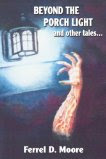
At the same time, however, I was also reading Beyond the Porch Light and Other Tales by our own Ferrel D. (Rick) Moore. Now, Rick Moore understands what makes horror work, and he applies all the elements in a seamless meld to evoke the full range of human emotions. Yes, there is an occasional element of grossness, but it is only a dash of seasoning to work that mixes fear, loathing, terror, shock, and—-very importantly-—love and affection into the story recipe. Here’s a great line from Moore’s story “Burying the Past,”: “…he would have seen that fear, loathing, and anger slithered behind the old man’s eyes like the pale worms that moved beneath dark porches.”
There! The “pale worms” evoke just a hint of grossness, a hint that doesn’t overwhelm but takes the reader deeper into the place where true horror dwells. That’s when you know you’re in the hands of someone who cares deeply about the craft of writing horror fiction. Moore wants to wring every emotion out of you, not just turn your stomach. That’s the mark of a good writer in general, and of a good horror writer in particular.
I haven’t quite finished Beyond the Porch Light… yet. I have one story to go. So far my favorites have been the title story, and an awesome little tale called “Electrocuting the Clowns.” All the stories are good, however, and I have no reservations about recommending this collection to anyone who likes good storytelling. And if you like to feel a little shiver while you sit and read, while the sun slowly sinks outside your home and the darkness comes creeping, then all the better. Just don’t venture beyond the porch light.
----
----
Mainly today, I want to talk about the gross out and its role in horror fiction. The gross out occurs when the reader makes the “disgust” face. The reader’s head recoils slightly from the page. The mouth curves back and down and the lips purse slightly as if the person has tasted something foul. The nostrils are flared, not to draw in a scent but rather to push air out so no scent can get in. Imagine what your face does when you smell something that really stinks and you’ll have the disgust face.
Disgust is an emotion, and as such it is capable of being evoked by physical description. Disgust is generally one element of horror, but it is, to my way of thinking, the least important element. Disgust is also easy to evoke, although easier in some readers than in others. I’ve read a lot of horror fiction in my day, for example, and written quite a bit, and it’s pretty hard to gross me out. A scene written purely for the gross out is thus likely to work best on those who read little if any horror. A good horror writer can typically gross out most folks with a snap of the fingers. But all you do then is send those folks away from your work, not draw them in. For the gross out to work it has to be only one element, a minor element, among all the other elements of good storytelling.
To avoid grossing out my blog readers, I’m going to give only vague examples of what I’m talking about below. I recently read Spawn by Shaun Hutson because someone said he was one of the grossest writers out there. The book certainly had a lot of grossness in it. For example, one early scene has hospital workers burning bed linens stained with all manner of bodily fluids. I made the disgust face at the description, so Mr. Hutson achieved his aim there. The problem was, I felt nothing other than disgust. A later description of aborted fetuses worked the same way. Disgust plus disgust does not make horror. It’s more like showing people boogers and watching them recoil.
At the same time, however, I was also reading Beyond the Porch Light and Other Tales by our own Ferrel D. (Rick) Moore. Now, Rick Moore understands what makes horror work, and he applies all the elements in a seamless meld to evoke the full range of human emotions. Yes, there is an occasional element of grossness, but it is only a dash of seasoning to work that mixes fear, loathing, terror, shock, and—-very importantly-—love and affection into the story recipe. Here’s a great line from Moore’s story “Burying the Past,”: “…he would have seen that fear, loathing, and anger slithered behind the old man’s eyes like the pale worms that moved beneath dark porches.”
There! The “pale worms” evoke just a hint of grossness, a hint that doesn’t overwhelm but takes the reader deeper into the place where true horror dwells. That’s when you know you’re in the hands of someone who cares deeply about the craft of writing horror fiction. Moore wants to wring every emotion out of you, not just turn your stomach. That’s the mark of a good writer in general, and of a good horror writer in particular.
I haven’t quite finished Beyond the Porch Light… yet. I have one story to go. So far my favorites have been the title story, and an awesome little tale called “Electrocuting the Clowns.” All the stories are good, however, and I have no reservations about recommending this collection to anyone who likes good storytelling. And if you like to feel a little shiver while you sit and read, while the sun slowly sinks outside your home and the darkness comes creeping, then all the better. Just don’t venture beyond the porch light.

----
----
Friday, August 21, 2009
Sage Advice, and Work
First, thanks to Sage for his insightful review of Write With Fire. Much appreciated. The book is getting a fair number of reviews, so far all good ones!
Work is kicking my ass and I’m way behind. So, it’s standard operating procedure for first thing in the new semester. I’m keeping my head above water so far, although with the pouring rain outside at the moment I don’t know how long that will last.
Lana seems to be almost completely recovered from her surgery. She’s already feeling much better than she was before so I’m happy about that.
While listening to the rain and helping students, in the background I’m running “The Love Song of J. Alfred Prufrock,” by T. S. Eliot. If this isn’t a masterpiece then I don’t know what is. I wish I could write a poem this fine.
"The yellow fog that rubs its back upon the window-panes,
The yellow smoke that rubs its muzzle on the window-panes
Licked its tongue into the corners of the evening,
Lingered upon the pools that stand in drains,
Let fall upon its back the soot that falls from chimneys,
Slipped by the terrace, made a sudden leap,
And seeing that it was a soft October night,
Curled once about the house, and fell asleep."
No time to write poetry now, though. The students are coming, hungry for overrides, in need of schedules, wanting me to fix all their problems with a few taps of my fingers on the keyboard.
And guess what: The electricity just went kaput! Better save this before the laptop battery loses its charge.
I’ll post this when our current returns!
----
----
Work is kicking my ass and I’m way behind. So, it’s standard operating procedure for first thing in the new semester. I’m keeping my head above water so far, although with the pouring rain outside at the moment I don’t know how long that will last.
Lana seems to be almost completely recovered from her surgery. She’s already feeling much better than she was before so I’m happy about that.
While listening to the rain and helping students, in the background I’m running “The Love Song of J. Alfred Prufrock,” by T. S. Eliot. If this isn’t a masterpiece then I don’t know what is. I wish I could write a poem this fine.
"The yellow fog that rubs its back upon the window-panes,
The yellow smoke that rubs its muzzle on the window-panes
Licked its tongue into the corners of the evening,
Lingered upon the pools that stand in drains,
Let fall upon its back the soot that falls from chimneys,
Slipped by the terrace, made a sudden leap,
And seeing that it was a soft October night,
Curled once about the house, and fell asleep."
No time to write poetry now, though. The students are coming, hungry for overrides, in need of schedules, wanting me to fix all their problems with a few taps of my fingers on the keyboard.
And guess what: The electricity just went kaput! Better save this before the laptop battery loses its charge.
I’ll post this when our current returns!
----
----
Tuesday, August 18, 2009
100 Books, plus more
Gary at the Tainted Archive tagged me with this and I was in just the mood to play. Before I do, though, two quick comments.
1. Rick over at The Writer and the White Cat had some very kind things to say about Write with Fire and its author. Since I respect Rick's own writing ability I'm very flattered. Thanks, my friend.
2. I go back to work tomorrow and my commenting on blogs may be sporadic at best the rest of the week. And now:
The BBC believes the majority of people will have only read 6 of the 100 books here.
1) Look at the list and put an ‘X’ after those you have read.
2) Tally your total at the bottom.
3) Tag a few people you think would enjoy sharing similar information about their book interests.
I'm not going to tag anyone, but feel free to try it on for size yourself.
1 Pride and Prejudice - Jane Austen
2 The Lord of the Rings - JRR Tolkien X
3 Jane Eyre - Charlotte Bronte
4 Harry Potter series - JK Rowling X
5 To Kill a Mockingbird - Harper Lee
6 The Bible X
7 Wuthering Heights - Emily Bronte
8 Nineteen Eighty Four - George Orwell X
9 His Dark Materials - Philip Pullman
10 Great Expectations - Charles Dickens
11 Little Women - Louisa M Alcott
12 Tess of the D’Urbervilles - Thomas Hardy
13 Catch 22 - Joseph Heller
14 Complete Works of Shakespeare X (some of them)
15 Rebecca - Daphne Du Maurier
16 The Hobbit - JRR Tolkien X
17 Birdsong - Sebastian Faulks
18 Catcher in the Rye - JD Salinger X
19 The Time Traveller’s Wife - Audrey Niffenegger
20 Middlemarch - George Eliot
21 Gone With The Wind - Margaret Mitchell
22 The Great Gatsby - F Scott Fitzgerald X
23 Bleak House - Charles Dickens
24 War and Peace - Leo Tolstoy
25 The Hitch Hiker’s Guide to the Galaxy - Douglas Adams X
26 Brideshead Revisited - Evelyn Waugh
27 Crime and Punishment - Fyodor Dostoyevsky
28 Grapes of Wrath - John Steinbeck X
29 Alice in Wonderland - Lewis Carroll X
30 The Wind in the Willows - Kenneth Grahame X
31 Anna Karenina - Leo Tolstoy
32 David Copperfield - Charles Dickens
33 Chronicles of Narnia - CS Lewis
34 Emma - Jane Austen
35 Persuasion - Jane Austen
36 The Lion, The Witch and The Wardrobe - CS Lewis
37 The Kite Runner - Khaled Hosseini
38 Captain Corelli’s Mandolin - Louis De Bernieres
39 Memoirs of a Geisha - Arthur Golden
40 Winnie the Pooh - AA Milne X
41 Animal Farm - George Orwell X
42 The Da Vinci Code - Dan Brown X
43 One Hundred Years of Solitude - Gabriel Garcia Marquez X
44 A Prayer for Owen Meaney - John Irving
45 The Woman in White - Wilkie Collins
46 Anne of Green Gables - LM Montgomery
47 Far From The Madding Crowd - Thomas Hardy
48 The Handmaid’s Tale - Margaret Atwood X
49 Lord of the Flies - William Golding X
50 Atonement - Ian McEwan
51 Life of Pi - Yann Martel
52 Dune - Frank Herbert X
53 Cold Comfort Farm - Stella Gibbons
54 Sense and Sensibility - Jane Austen
55 A Suitable Boy - Vikram Seth
56 The Shadow of the Wind - Carlos Ruiz Zafon
57 A Tale Of Two Cities - Charles Dickens
58 Brave New World - Aldous Huxley X
59 The Curious Incident of the Dog in the Night-time - Mark Haddon
60 Love In The Time Of Cholera - Gabriel Garcia Marquez X
61 Of Mice and Men - John Steinbeck X
62 Lolita - Vladimir Nabokov
63 The Secret History - Donna Tartt
64 The Lovely Bones - Alice Sebold
65 Count of Monte Cristo - Alexandre Dumas X
66 On The Road - Jack Kerouac X
67 Jude the Obscure - Thomas Hardy
68 Bridget Jones’s Diary - Helen Fielding
69 Midnight’s Children - Salman Rushdie
70 Moby Dick - Herman Melville X
71 Oliver Twist - Charles Dickens
72 Dracula - Bram Stoker X
73 The Secret Garden - Frances Hodgson Burnett
74 Notes From A Small Island - Bill Bryson
75 Ulysses - James Joyce
76 The Bell Jar - Sylvia Plath
77 Swallows and Amazons - Arthur Ransome
78 Germinal - Emile Zola
79 Vanity Fair - William Makepeace Thackeray
80 Possession - AS Byatt
81 A Christmas Carol - Charles Dickens X
82 Cloud Atlas - David Mitchel
83 The Color Purple - Alice Walker
84 The Remains of the Day - Kazuo Ishiguro
85 Madame Bovary - Gustave Flaubert
86 A Fine Balance - Rohinton Mistry
87 Charlotte’s Web - EB White X
88 The Five People You Meet In Heaven - Mitch Albom
89 Adventures of Sherlock Holmes - Sir Arthur Conan Doyle X (Some of them)
90 The Faraway Tree Collection - Enid Blyton
91 Heart of Darkness - Joseph Conrad X
92 The Little Prince - Antoine De Saint-Exupery X
93 The Wasp Factory - Iain Banks
94 Watership Down - Richard Adams X
95 A Confederacy of Dunces - John Kennedy Toole X
96 A Town Like Alice - Nevil Shute
97 The Three Musketeers - Alexandre Dumas X
98 Hamlet - William Shakespeare X
99 Charlie and the Chocolate Factory - Roald Dahl
100 Les Miserables - Victor Hugo
I’ve read 31, plus 2 partials. Wow, I usually do pretty bad at these kinds of lists. I never was one to read a lot of what I was told I should read. Some day I’m going to post my own list of “required” reading.
---
---
1. Rick over at The Writer and the White Cat had some very kind things to say about Write with Fire and its author. Since I respect Rick's own writing ability I'm very flattered. Thanks, my friend.
2. I go back to work tomorrow and my commenting on blogs may be sporadic at best the rest of the week. And now:
The BBC believes the majority of people will have only read 6 of the 100 books here.
1) Look at the list and put an ‘X’ after those you have read.
2) Tally your total at the bottom.
3) Tag a few people you think would enjoy sharing similar information about their book interests.
I'm not going to tag anyone, but feel free to try it on for size yourself.
1 Pride and Prejudice - Jane Austen
2 The Lord of the Rings - JRR Tolkien X
3 Jane Eyre - Charlotte Bronte
4 Harry Potter series - JK Rowling X
5 To Kill a Mockingbird - Harper Lee
6 The Bible X
7 Wuthering Heights - Emily Bronte
8 Nineteen Eighty Four - George Orwell X
9 His Dark Materials - Philip Pullman
10 Great Expectations - Charles Dickens
11 Little Women - Louisa M Alcott
12 Tess of the D’Urbervilles - Thomas Hardy
13 Catch 22 - Joseph Heller
14 Complete Works of Shakespeare X (some of them)
15 Rebecca - Daphne Du Maurier
16 The Hobbit - JRR Tolkien X
17 Birdsong - Sebastian Faulks
18 Catcher in the Rye - JD Salinger X
19 The Time Traveller’s Wife - Audrey Niffenegger
20 Middlemarch - George Eliot
21 Gone With The Wind - Margaret Mitchell
22 The Great Gatsby - F Scott Fitzgerald X
23 Bleak House - Charles Dickens
24 War and Peace - Leo Tolstoy
25 The Hitch Hiker’s Guide to the Galaxy - Douglas Adams X
26 Brideshead Revisited - Evelyn Waugh
27 Crime and Punishment - Fyodor Dostoyevsky
28 Grapes of Wrath - John Steinbeck X
29 Alice in Wonderland - Lewis Carroll X
30 The Wind in the Willows - Kenneth Grahame X
31 Anna Karenina - Leo Tolstoy
32 David Copperfield - Charles Dickens
33 Chronicles of Narnia - CS Lewis
34 Emma - Jane Austen
35 Persuasion - Jane Austen
36 The Lion, The Witch and The Wardrobe - CS Lewis
37 The Kite Runner - Khaled Hosseini
38 Captain Corelli’s Mandolin - Louis De Bernieres
39 Memoirs of a Geisha - Arthur Golden
40 Winnie the Pooh - AA Milne X
41 Animal Farm - George Orwell X
42 The Da Vinci Code - Dan Brown X
43 One Hundred Years of Solitude - Gabriel Garcia Marquez X
44 A Prayer for Owen Meaney - John Irving
45 The Woman in White - Wilkie Collins
46 Anne of Green Gables - LM Montgomery
47 Far From The Madding Crowd - Thomas Hardy
48 The Handmaid’s Tale - Margaret Atwood X
49 Lord of the Flies - William Golding X
50 Atonement - Ian McEwan
51 Life of Pi - Yann Martel
52 Dune - Frank Herbert X
53 Cold Comfort Farm - Stella Gibbons
54 Sense and Sensibility - Jane Austen
55 A Suitable Boy - Vikram Seth
56 The Shadow of the Wind - Carlos Ruiz Zafon
57 A Tale Of Two Cities - Charles Dickens
58 Brave New World - Aldous Huxley X
59 The Curious Incident of the Dog in the Night-time - Mark Haddon
60 Love In The Time Of Cholera - Gabriel Garcia Marquez X
61 Of Mice and Men - John Steinbeck X
62 Lolita - Vladimir Nabokov
63 The Secret History - Donna Tartt
64 The Lovely Bones - Alice Sebold
65 Count of Monte Cristo - Alexandre Dumas X
66 On The Road - Jack Kerouac X
67 Jude the Obscure - Thomas Hardy
68 Bridget Jones’s Diary - Helen Fielding
69 Midnight’s Children - Salman Rushdie
70 Moby Dick - Herman Melville X
71 Oliver Twist - Charles Dickens
72 Dracula - Bram Stoker X
73 The Secret Garden - Frances Hodgson Burnett
74 Notes From A Small Island - Bill Bryson
75 Ulysses - James Joyce
76 The Bell Jar - Sylvia Plath
77 Swallows and Amazons - Arthur Ransome
78 Germinal - Emile Zola
79 Vanity Fair - William Makepeace Thackeray
80 Possession - AS Byatt
81 A Christmas Carol - Charles Dickens X
82 Cloud Atlas - David Mitchel
83 The Color Purple - Alice Walker
84 The Remains of the Day - Kazuo Ishiguro
85 Madame Bovary - Gustave Flaubert
86 A Fine Balance - Rohinton Mistry
87 Charlotte’s Web - EB White X
88 The Five People You Meet In Heaven - Mitch Albom
89 Adventures of Sherlock Holmes - Sir Arthur Conan Doyle X (Some of them)
90 The Faraway Tree Collection - Enid Blyton
91 Heart of Darkness - Joseph Conrad X
92 The Little Prince - Antoine De Saint-Exupery X
93 The Wasp Factory - Iain Banks
94 Watership Down - Richard Adams X
95 A Confederacy of Dunces - John Kennedy Toole X
96 A Town Like Alice - Nevil Shute
97 The Three Musketeers - Alexandre Dumas X
98 Hamlet - William Shakespeare X
99 Charlie and the Chocolate Factory - Roald Dahl
100 Les Miserables - Victor Hugo
I’ve read 31, plus 2 partials. Wow, I usually do pretty bad at these kinds of lists. I never was one to read a lot of what I was told I should read. Some day I’m going to post my own list of “required” reading.
---
---
Sunday, August 16, 2009
Movie OD
First, thanks to everyone who commented on my last post. And thanks to everyone who suggested possibilities for the books I mentioned there. Special thanks to Greg, Writtenwyrd, Don, and Daniel, who did indeed identify some of the books. I owe you folks. I now can put authors and details to “The Secret Staircase,” “Smuggler’s Island, “Claws,” “Listen to the Worm,” “Panther!,” and “My Gift to You.” Don over at Issa’s Untidy Hut came up with the most. I knew my blogging pals were cool.
Today’s post is on movies. Now, I don’t watch many movies. And only when they are absolutely convenient to me. But we’ve got the Showtime movie channels for free for a bit and I thought, why not take a day off and watch a few. I was actually pleasantly surprised that I didn’t hate most of what I saw. But here’s my take, ranked from my favorite to least favorite:
1. Rambo. OK, this has to be one of the all time goriest movies ever. So, rather naturally, I enjoyed it. I imagine the effects of the artillery and mines was probably portrayed very realistically, but I’m skeptical that regular rifle fire, even from a sniper rifle, would completely disintegrate whole heads or blow off limbs at the shoulder. I’ve seen the effect of high powered bullets on animals as big as deer, so thus my skepticism. The end was rather touching, though, and it seemed to bring the series to its close.
2. 3:10 to Yuma. It’s a western and I liked it, although it’s no Once Upon a Time in the West. Russell Crowe did a great job as the villain I thought, and had some great one liners. However, there were some letdowns in the orchestration of the whole thing. How does a prisoner in cuffs manage to kill two members of the posse taking him to the prison train without, perhaps, being bound and watched a little more closely after that? On the other hand, this one had by far the best all around cast of the movies I saw. Even the supporting actors did well, and many of them were well known, such as Peter Fonda.
3. Snow White: A Tale of Terror. Sigourney Weaver did a bang up job as the wicked stepmother/witch in this one. I thought she was superb. This was a somewhat loose retelling of the Snow White story but was pretty enjoyable. It was definitely a horror rather than a fantasy. The supporting cast was much weaker than Weaver, and I could kind of see at the beginning why the Stepmother didn’t much like the stepdaughter. I would have wanted to strangle the little priss myself. Some interesting visuals as well.
4. Into the Wild. This is the story of the young man who walked on his own into the Alaskan Wilderness, lived for something like a year in an abandoned bus there, and then died from eating poisonous plants. I came close to abandoning this one early on because the kid was just so immature. He was born into privilege to the point where he could afford to rebel against it all. And he did, against a life and parents that were not nearly as bad as he seemed to think. However, I have to admit the boy had some testicular fortitude and in the end I felt quite a bit of sympathy for him. He learned a bit of wisdom, although he died before he got a chance to exercise it. There were also some very good supporting actors in this one, especially Hal Holbrook.
5. There Will Be Blood. Twenty minutes into this long, long movie I turned to Lana and said, “OK, I see where this is going. We’ll have one scene with blood at the very end and then fade to black. That was exactly what happened, with no tension or suspense in between. How can a pretentious art film be so incredibly cliché? How many times has this story been told? 1). A businessman who is already somewhat unscrupulous becomes more and more brutal and bitter over time, as he also descends into alcoholism. 2). Said businessman gets everything he thinks he wants but nothing he needs. 3) said businessman runs off the only people who give a damn about him. There were two good things about this movie. Daniel Day Lewis did a great job as the despicable businessman, and the musical score was quite good. These could not save what was ultimately a rather silly and completely predictable film. This is the only one of the five I wish I had my time back on.
----
----
Today’s post is on movies. Now, I don’t watch many movies. And only when they are absolutely convenient to me. But we’ve got the Showtime movie channels for free for a bit and I thought, why not take a day off and watch a few. I was actually pleasantly surprised that I didn’t hate most of what I saw. But here’s my take, ranked from my favorite to least favorite:
1. Rambo. OK, this has to be one of the all time goriest movies ever. So, rather naturally, I enjoyed it. I imagine the effects of the artillery and mines was probably portrayed very realistically, but I’m skeptical that regular rifle fire, even from a sniper rifle, would completely disintegrate whole heads or blow off limbs at the shoulder. I’ve seen the effect of high powered bullets on animals as big as deer, so thus my skepticism. The end was rather touching, though, and it seemed to bring the series to its close.
2. 3:10 to Yuma. It’s a western and I liked it, although it’s no Once Upon a Time in the West. Russell Crowe did a great job as the villain I thought, and had some great one liners. However, there were some letdowns in the orchestration of the whole thing. How does a prisoner in cuffs manage to kill two members of the posse taking him to the prison train without, perhaps, being bound and watched a little more closely after that? On the other hand, this one had by far the best all around cast of the movies I saw. Even the supporting actors did well, and many of them were well known, such as Peter Fonda.
3. Snow White: A Tale of Terror. Sigourney Weaver did a bang up job as the wicked stepmother/witch in this one. I thought she was superb. This was a somewhat loose retelling of the Snow White story but was pretty enjoyable. It was definitely a horror rather than a fantasy. The supporting cast was much weaker than Weaver, and I could kind of see at the beginning why the Stepmother didn’t much like the stepdaughter. I would have wanted to strangle the little priss myself. Some interesting visuals as well.
4. Into the Wild. This is the story of the young man who walked on his own into the Alaskan Wilderness, lived for something like a year in an abandoned bus there, and then died from eating poisonous plants. I came close to abandoning this one early on because the kid was just so immature. He was born into privilege to the point where he could afford to rebel against it all. And he did, against a life and parents that were not nearly as bad as he seemed to think. However, I have to admit the boy had some testicular fortitude and in the end I felt quite a bit of sympathy for him. He learned a bit of wisdom, although he died before he got a chance to exercise it. There were also some very good supporting actors in this one, especially Hal Holbrook.
5. There Will Be Blood. Twenty minutes into this long, long movie I turned to Lana and said, “OK, I see where this is going. We’ll have one scene with blood at the very end and then fade to black. That was exactly what happened, with no tension or suspense in between. How can a pretentious art film be so incredibly cliché? How many times has this story been told? 1). A businessman who is already somewhat unscrupulous becomes more and more brutal and bitter over time, as he also descends into alcoholism. 2). Said businessman gets everything he thinks he wants but nothing he needs. 3) said businessman runs off the only people who give a damn about him. There were two good things about this movie. Daniel Day Lewis did a great job as the despicable businessman, and the musical score was quite good. These could not save what was ultimately a rather silly and completely predictable film. This is the only one of the five I wish I had my time back on.
----
----
Friday, August 14, 2009
Books I'm Looking For
In past days my record keeping on my books was not always as disciplined as it is today. I know, I'm very very bad. Lana will have to punish me. But, nevertheless, there are a number of books in my list of previously read books that have titles but no author listed. And I have not been able to identify or locate them. I hang my head in shame, I tell you!
In hopes that someone in the blogosphere might have an idea about the authors for these books, I'm going to give the details I know about here. Said details are very slender. But if anyone recognizes any of these I'd appreciate a heads up. So without further ado, I air my dirty book laundry below:
1. Title – The Freak
Genre – Horror
Time period – I would have read this probably sometime in the 1980s or earlier.
2. Title – Claws
Genre – Horror
Time period - Again, probably from the 1980s.
Details – I seem to remember it had something to do with either cats or crabs. I originally thought this might be "Night of the Claw" by Jay Ramsey, but after getting that book I don't think so.
3. Title - Smuggler’s Island
Genre – young adult, I'm pretty sure
Time Period – probably from the 1970s or earlier. This is 'not' the Avi book by that name from much later.
4. Title - My Gift to You
Genre - Poetry
Time Period - Some time before the late 1980s. At least that's when I read it.
5. Title - Listen to the Worm
Genre - Poetry
Time Period - Also some time before the late 1980s.
6. Title - The Sun is Up
Genre - Poetry
Time Period - Also some time before the late 1980s.
7. Title - Panther
Genre - Young adult probably
Time Period - Almost certainly the 1970s or earlier
8. Title - The Secret Staircase
Genre - Young adult or children's book
Time Period - Probably from before the early 1980s. This may be one I read to my son.
9. Title - Mystery of the Red Skull
Genre - probably young adult
Time Period - before the 1980s, probably in the early 1970s.
Well, there are more but that's probably enough for this post.
-----
----
In hopes that someone in the blogosphere might have an idea about the authors for these books, I'm going to give the details I know about here. Said details are very slender. But if anyone recognizes any of these I'd appreciate a heads up. So without further ado, I air my dirty book laundry below:
1. Title – The Freak
Genre – Horror
Time period – I would have read this probably sometime in the 1980s or earlier.
2. Title – Claws
Genre – Horror
Time period - Again, probably from the 1980s.
Details – I seem to remember it had something to do with either cats or crabs. I originally thought this might be "Night of the Claw" by Jay Ramsey, but after getting that book I don't think so.
3. Title - Smuggler’s Island
Genre – young adult, I'm pretty sure
Time Period – probably from the 1970s or earlier. This is 'not' the Avi book by that name from much later.
4. Title - My Gift to You
Genre - Poetry
Time Period - Some time before the late 1980s. At least that's when I read it.
5. Title - Listen to the Worm
Genre - Poetry
Time Period - Also some time before the late 1980s.
6. Title - The Sun is Up
Genre - Poetry
Time Period - Also some time before the late 1980s.
7. Title - Panther
Genre - Young adult probably
Time Period - Almost certainly the 1970s or earlier
8. Title - The Secret Staircase
Genre - Young adult or children's book
Time Period - Probably from before the early 1980s. This may be one I read to my son.
9. Title - Mystery of the Red Skull
Genre - probably young adult
Time Period - before the 1980s, probably in the early 1970s.
Well, there are more but that's probably enough for this post.
-----
----
Wednesday, August 12, 2009
Vicious Verses and Reanimated Rhymes

Vicious Verses and Reanimated Rhymes is out. If you’re wondering why I’m telling you this, it's because 1) I like zombies a lot, and 2) I have a poem in it. The poem is called “Forever,” and is only one of 90+ poetic visions of zombies. Here’s the basic blurb about the collection from the publisher:
“The dead rise. The world dies. Mankind falls and enters Death's halls. Over 90 poems of carnage, hopelessness and despair mixed with oodles of the living dead await you. Vicious Verses and Reanimated Rhymes will not only melt your brain . . . it'll tear out your jugular!
If zombie poetry is your thing, the collection is already available at Amazon and Other Sites
There’s even an ebook edition available for the kindle.
By the way, I forgot to mention in my excitement over Write With Fire that the most recent Illuminata is also out. There’s a very interesting article on “Reading is Dead; Long Live the Literate!” There’s also a bunch of reviews, and I’ve got an article in there called “Reading Books On Writing." This is a new piece, which isn't in Write With Fire and hasn't appeared on this blog before. The issue is Volume 7, Issue 3, July 09 here.
PS: This Just In: X-Dell has some kind words to say about my writing over on his blog. I much appreciate it, so naturally I had to post a link to it. I used to be rather shame'ful' about promoting myself. That wasn't working very well for me.
If you get a chance while over at X-Dell's site, check out the Golden Ganesh widget at top right and listen to the episodes of this ensemble audio story. Very pulpy with some neat twists and turns. Highly recommended.
----
----
Monday, August 10, 2009
First Impressions
One thing I worry about as a writer is first impressions. And I'm not talking about the impression one makes when you first meet someone physically. I'm talking about when a reader is exposed to that first story or book by an author. That first impression is absolutely critical if that reader is to pick up more of the author's works. Here's a couple of examples of the potential problems from my experience as a reader rather than a writer.
1: I'd been hearing for a while about a publisher called Hard Case Crime. Almost everyone I knew who'd read a book from that publisher raved about it. The covers were appropriately pulpish and cool, and I decided I wanted in on this. So, one day in a book store I picked up The Colorado Kid by Stephen King, which was apparently the initial book in the Hard Case Crime list. What better place to start than with book 1 of a line? Plus, I liked a lot of stuff by King. Unfortunately, this one sucked big time. Although it was mercifully short, I still barely finished it.
And here's where first impressions play a role. Despite the fact that I've been told over and over that King's book was not indicative of the Hard Case Crime list, and that the other books really, really are good, I've not picked up a single one. Intellectually, I'm sure I probably would like some of the other Hard Case novels. But, there are a lot of books to spend my money on. And when it comes time to shell out that money, I have, so far, been unable to persuade myself to take a chance on another Hard Case book instead of a book that feels like it has more promise.
2. Years ago I read Samarkand by Graham Diamond. When I bought it, it seemed like a book that was right down my alley. An exotic setting. A city under siege. Swords and sorcery. But I didn't care much for it (although it was considerably better than The Coyote Kid). Diamond has at least half a dozen more fantasy novels with equally tantalizing settings. I picked up one at a book sale years ago for 50 cents but I haven't read it and probably never will read another Diamond book. When I look at my to-be-read pile, there's just too many books above the Diamond one that promise more.
These are the kinds of first impressions I worry about. What if someone reads one book by me, or even a story by me, and doesn't like it. Will they ever give me another chance? Should they give me another chance?
What about you? Have you had any of these kinds of experiences? Let me hear some of your first impression stories.
----
----
1: I'd been hearing for a while about a publisher called Hard Case Crime. Almost everyone I knew who'd read a book from that publisher raved about it. The covers were appropriately pulpish and cool, and I decided I wanted in on this. So, one day in a book store I picked up The Colorado Kid by Stephen King, which was apparently the initial book in the Hard Case Crime list. What better place to start than with book 1 of a line? Plus, I liked a lot of stuff by King. Unfortunately, this one sucked big time. Although it was mercifully short, I still barely finished it.
And here's where first impressions play a role. Despite the fact that I've been told over and over that King's book was not indicative of the Hard Case Crime list, and that the other books really, really are good, I've not picked up a single one. Intellectually, I'm sure I probably would like some of the other Hard Case novels. But, there are a lot of books to spend my money on. And when it comes time to shell out that money, I have, so far, been unable to persuade myself to take a chance on another Hard Case book instead of a book that feels like it has more promise.
2. Years ago I read Samarkand by Graham Diamond. When I bought it, it seemed like a book that was right down my alley. An exotic setting. A city under siege. Swords and sorcery. But I didn't care much for it (although it was considerably better than The Coyote Kid). Diamond has at least half a dozen more fantasy novels with equally tantalizing settings. I picked up one at a book sale years ago for 50 cents but I haven't read it and probably never will read another Diamond book. When I look at my to-be-read pile, there's just too many books above the Diamond one that promise more.
These are the kinds of first impressions I worry about. What if someone reads one book by me, or even a story by me, and doesn't like it. Will they ever give me another chance? Should they give me another chance?
What about you? Have you had any of these kinds of experiences? Let me hear some of your first impression stories.
----
----
Saturday, August 08, 2009
Implosion, and Other Tales of My Days
I’ve done exactly zero writing in the past three days. That’s not like me but I just have not been able to get going. Each time I sit down at the computer I end up either fiddling with my books or just playing the video game Age of Empires. It’s not the fact that Lana needs the occasional hand. She’s a model patient, and is recovering, although she still feels pretty miserable. The slowdown is inside me.
Of course, I could make excuses. My legs have been bothering me pretty badly and yesterday I spent a fair amount of time on the phone with our internet provider, and with issues dealing with my son trying to get back into school this fall. Turns out his health records were misplaced after Katrina and the school needed evidence of his immunizations. We finally got that straightened out but it took a bit.
The problem is really a lack of focus on my part. The summer is winding down here and within 10 days I’ll be back at work. I’ll have to get started on syllabi sooner than that. Although I like my job, transitions are hard for me. I’m going to try to get going today, though. Wish me luck.
One interesting thing came out of fiddling with my books, though. I was looking through an old book of SF stories called Santana Morning and Other Stories by Mike Dolan. It was published from Powell Sci-Fi in 1970. Interestingly, it contains a story called “The Fog,” which I reread, and I had to arch an eyebrow at the strong similarities with Stephen King’s later novella “The Mist.” King’s story is much better and more detailed, and the two stories certainly aren’t identical, but there are enough similarities to make me wonder whether King read “The Fog” once upon a time and it stayed with him to influence him when he wrote “The Mist.” I'm absolutely not saying that King might have plagiarized this story. It's more the basic idea that is similar. The writing and wording and style are all quite different. It could have been an influence on King, nothing more.
In publishing news, our Writing in Psychology: A Guidebook is out as of yesterday. This is a textbook I wrote with a couple of other faculty members at Xavier: Elliott Hammer, and Y Du Bois Irvin (who is the granddaughter of W. E. B. Du Bois). This is a book specifically designed to help students in writing formal term papers and research reports. We use it in our psychology department writing classes at Xavier and I have hopes some other schools might adopt it. It’s strictly nonfiction, and unless you’re taking a course in psychology or writing papers in a field where APA style is used it’s probably not going to be useful to anyone here. It’s not a general writing guide like Write With Fire. I’m pretty happy with it, though. The cover is here if you want to take a look at the details. The cover is also below:

----
----
Of course, I could make excuses. My legs have been bothering me pretty badly and yesterday I spent a fair amount of time on the phone with our internet provider, and with issues dealing with my son trying to get back into school this fall. Turns out his health records were misplaced after Katrina and the school needed evidence of his immunizations. We finally got that straightened out but it took a bit.
The problem is really a lack of focus on my part. The summer is winding down here and within 10 days I’ll be back at work. I’ll have to get started on syllabi sooner than that. Although I like my job, transitions are hard for me. I’m going to try to get going today, though. Wish me luck.
One interesting thing came out of fiddling with my books, though. I was looking through an old book of SF stories called Santana Morning and Other Stories by Mike Dolan. It was published from Powell Sci-Fi in 1970. Interestingly, it contains a story called “The Fog,” which I reread, and I had to arch an eyebrow at the strong similarities with Stephen King’s later novella “The Mist.” King’s story is much better and more detailed, and the two stories certainly aren’t identical, but there are enough similarities to make me wonder whether King read “The Fog” once upon a time and it stayed with him to influence him when he wrote “The Mist.” I'm absolutely not saying that King might have plagiarized this story. It's more the basic idea that is similar. The writing and wording and style are all quite different. It could have been an influence on King, nothing more.
In publishing news, our Writing in Psychology: A Guidebook is out as of yesterday. This is a textbook I wrote with a couple of other faculty members at Xavier: Elliott Hammer, and Y Du Bois Irvin (who is the granddaughter of W. E. B. Du Bois). This is a book specifically designed to help students in writing formal term papers and research reports. We use it in our psychology department writing classes at Xavier and I have hopes some other schools might adopt it. It’s strictly nonfiction, and unless you’re taking a course in psychology or writing papers in a field where APA style is used it’s probably not going to be useful to anyone here. It’s not a general writing guide like Write With Fire. I’m pretty happy with it, though. The cover is here if you want to take a look at the details. The cover is also below:

----
----
Wednesday, August 05, 2009
Lana
Well, Lana had surgery this morning but she came through with flying colors. She's been sleeping all day and I'm sure she'll be very sore and not feeling too well when she wakes up. She has to spend the night in the hospital but I'll bring her home in the morning. It will be weird sleeping at home without her tonight. Please keep her in your thoughts.
I doubt I'll be doing much posting for the next day or two, btw.
In the meantime, though, I started and finished Blade #23: Empire of Blood, while Lana was in surgery (almost 3 hours) and recovery (longer). It's a pretty quick read. Starts out a bit slow but has some rousing action at the end. I found out that Roland Green wrote it. I must confess to not having been a fan of Green's, but this story may make me reconsider giving some of his other work a read.
Lana and I also watched The Watchmen the other night and both of us thought it was really good. I didn't think it was as good as the graphic novel, which is by far the best graphic novel I've ever read, but the movie was decent and stayed pretty close to the book without using the subplot.
Keep the shiny sides up.
---
---
I doubt I'll be doing much posting for the next day or two, btw.
In the meantime, though, I started and finished Blade #23: Empire of Blood, while Lana was in surgery (almost 3 hours) and recovery (longer). It's a pretty quick read. Starts out a bit slow but has some rousing action at the end. I found out that Roland Green wrote it. I must confess to not having been a fan of Green's, but this story may make me reconsider giving some of his other work a read.
Lana and I also watched The Watchmen the other night and both of us thought it was really good. I didn't think it was as good as the graphic novel, which is by far the best graphic novel I've ever read, but the movie was decent and stayed pretty close to the book without using the subplot.
Keep the shiny sides up.
---
---
Tuesday, August 04, 2009
One Thing I Miss About the Old Days

Most book lovers I know have at least some rather obscure writers they read, and obscure works they’d like to own. There’s no doubt that the internet has made it easier to scratch that itch. And except for the hit to one’s pocketbook that’s a good thing. In most ways.
Using the internet in the past few years has led to a substantial increase in book buying for me. A lot of those books have been just the kind of obscure works in SF and fantasy that I so love. A lot of them have been books that I read when I was a kid and have wanted to own and reread ever since. And, I’ve also been able to discover series that I had never heard of but which were right down my alley. I’ve found a lot of good reading via the net. These are good things
But… (You knew a “but” was coming didn’t you?), there’s one thing I miss about the old book hunting days. To channel for a moment my inner nerd, I remember the thrill of finding an unknown used bookstore and going in to browse the shelves for the first time. I had a list of books I wanted, although I didn’t generally have to carry the list with me. I knew in my head what I was looking for. I’d scan along the rows of colorful spines, checking for an obscure Robert E. Howard book here, searching out an Alan Burt Akers volume there. And OH the excitement when I found something I’d wanted but didn’t have. I generally didn’t ‘kiss’ the covers. Not physically anyway. But it was like finding a gold nugget in a pan of dross.
I still remember with absolute clarity one of my favorite moments in personal book hunting history. In high school I’d borrowed a book from my brother-in-law called Meat on the Hoof, about college football at the University of Texas. The book stayed with me, and when I was in my early thirties I began searching for it in used bookstores everywhere I went. Although I remembered the title and the cover, I had no idea who had written it. But I wanted that book. I even called my brother-in-law but he no longer had the copy. I couldn’t find it anywhere else either.
Then, one day, my ex-wife and I were shopping for furniture. No matter where I’ve ever gone, I’ve paid attention to the books that were in that place. So on this day I stopped to glance at a set of books being used as ‘props’ with furniture. And there lay Meat on the Hoof. I immediately took it up to the salesman and asked to buy it. He had no idea of a price for it. They sold furniture. So he just laughed and told me I could have it. I know exactly where it is on my shelves right now. And I remember almost every detail of that ‘find.”
Would it have been the same if I’d been able to search it out on the net? I know from other experiences of finding books via the net that it would not have been. Oh, I still get a sense of excitement and pleasure, but it’s like having a glass or two of wine with dinner as opposed to the buzz of those first couple of pitchers of beer on a lazy afternoon in a darkened bar when you’ve got Friday night ahead of you.
Sometimes I miss the old days. How about you?
----
----
Subscribe to:
Posts (Atom)